Live Client | Gaming + Integrated Partnerships
Consumer Insights, Ecosystem Strategy, Partnership Strategy, Experience Design
Turning player wellness into a competitive growth lever
THE SITUATION
Riot’s competitive edge was driving growth, but not sustainability.
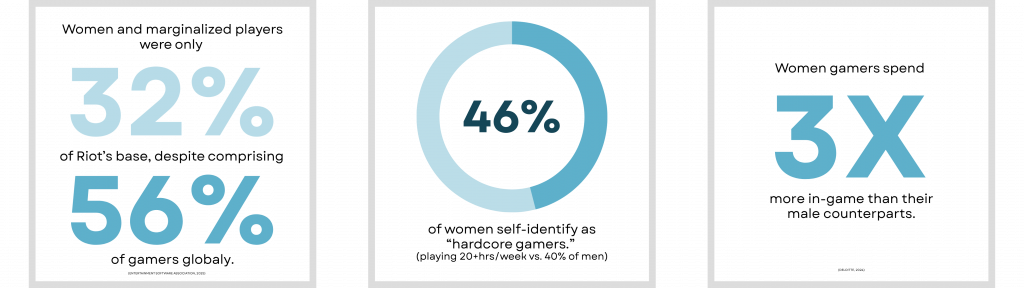
Riot had built one of the most competitive and culturally influential ecosystems in gaming. But growth wasn’t adding up over time.
Players were entering, but not staying. And large segments, especially women and newer players, weren’t entering at all.
THE FRICTION
The issue wasn’t gameplay; it was the emotional experience around it.
The instinct was to look at gameplay, but the game wasn’t the issue.
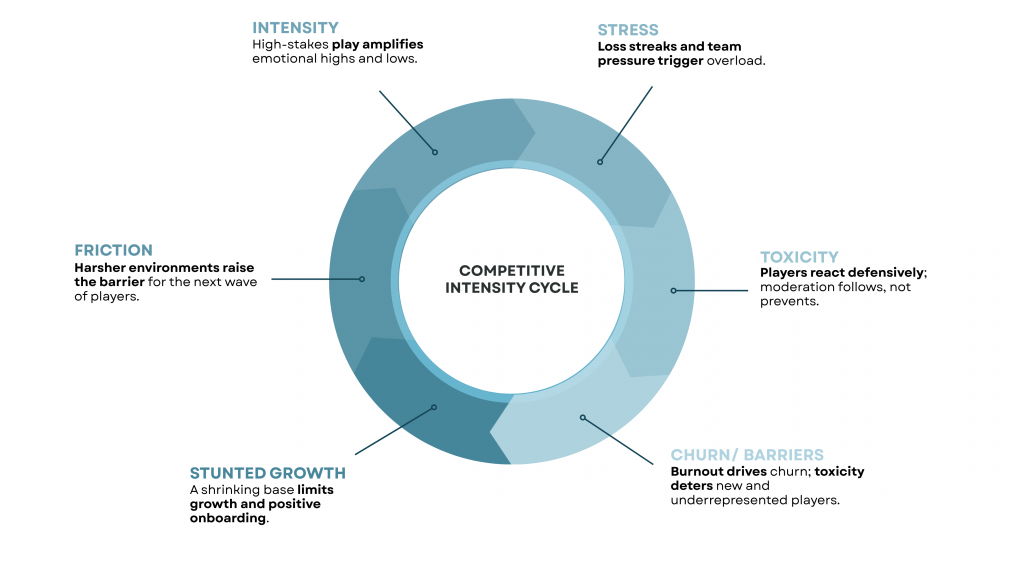
The same intensity that built the ecosystem was also pushing players out through burnout, toxic interactions, and intimidation for newer players.
THE PATTERN
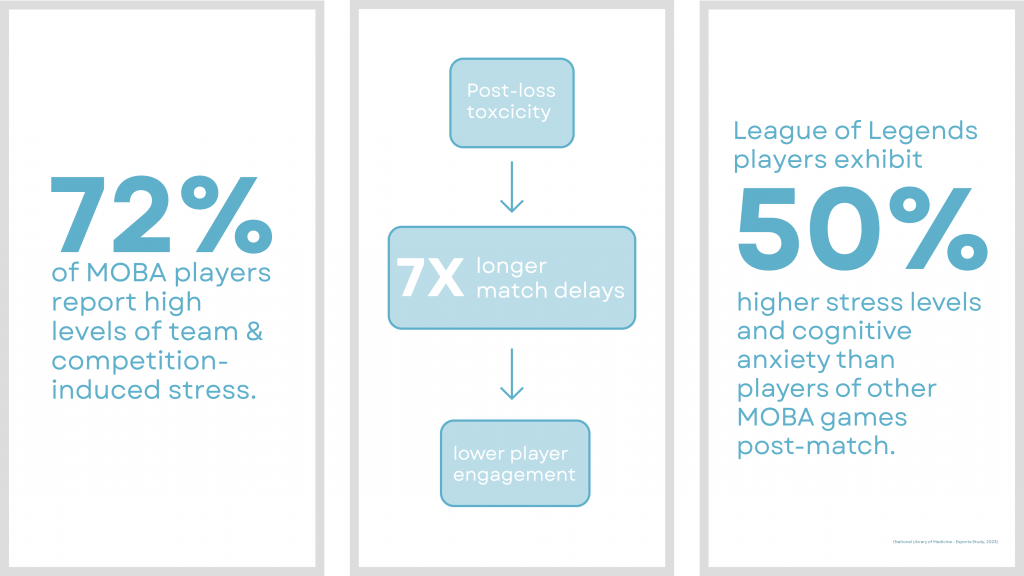
Toxicity often followed moments of competitive stress.
Most teams treat toxicity as a moderation problem, but much of it isn’t offensive…it’s defensive. It shows up in moments of pressure: loss streaks, high-stakes matches, emotional overload.
If stress is driving the behavior, enforcement won’t fix it. Prevention will.
THE INSIGHT
Emotional regulation isn’t “soft,” it’s a performance advantage.
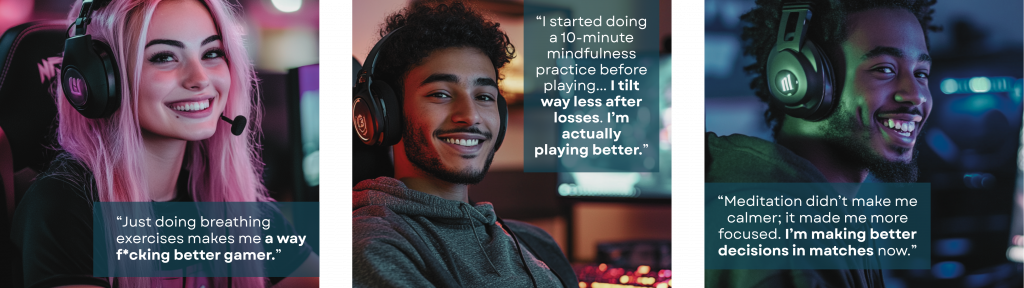
Mindfulness measurably improves focus, emotional control, and decision-making under pressure, reducing player stress by ~30% (NLM Esports Study, 2025).
Player testimonials described the same outcome more simply:
THE STRATEGY
Treat mental wellness as a skill, not a side initiative.
Instead of positioning mental wellness as support, we reframed it as performance infrastructure.
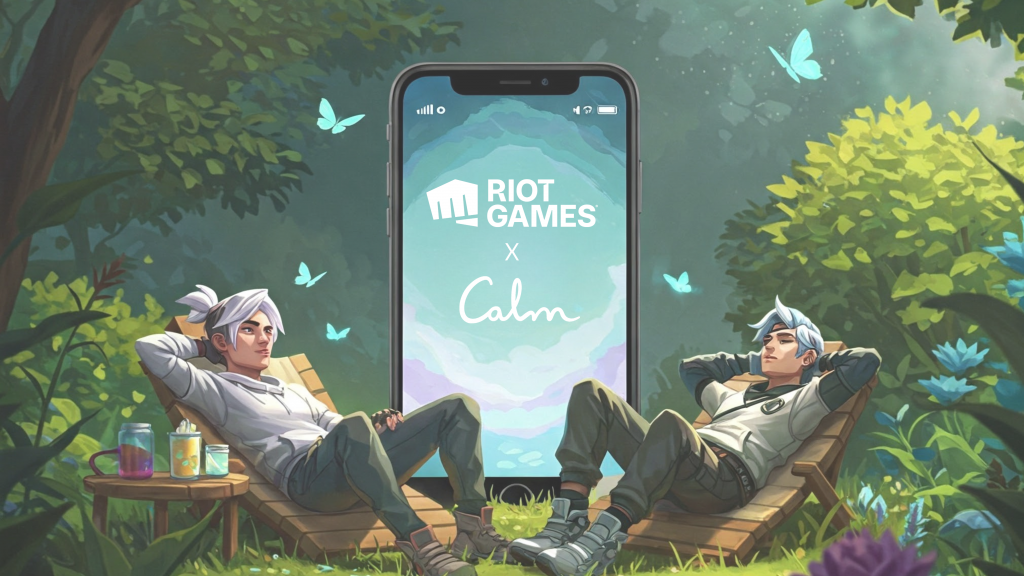
That made Calm an obvious partner: combining habit-forming tools with a large audience that over-indexes against Riot’s most underpenetrated players.
A system designed to help players stay longer, play better, and expand who sees themselves in the game.
THE IDEA
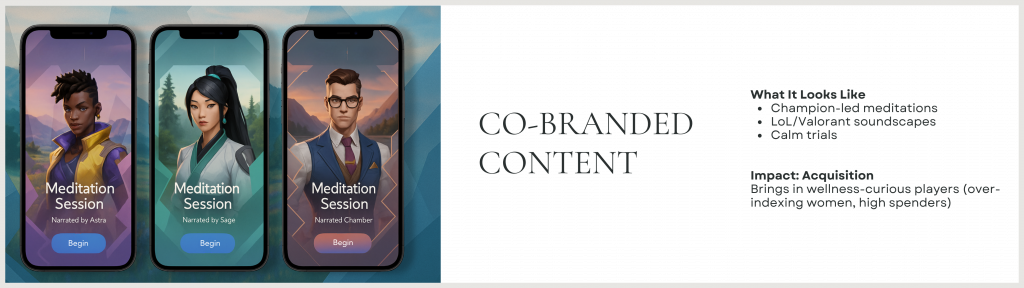
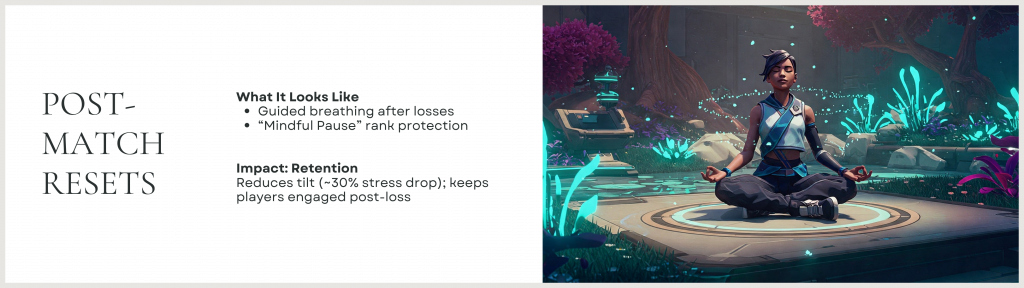
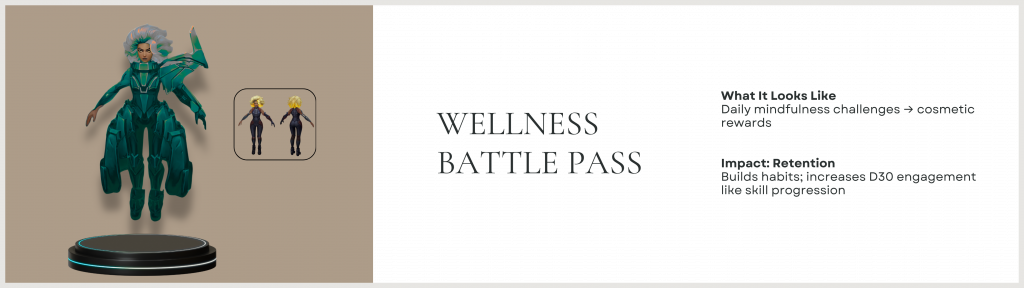
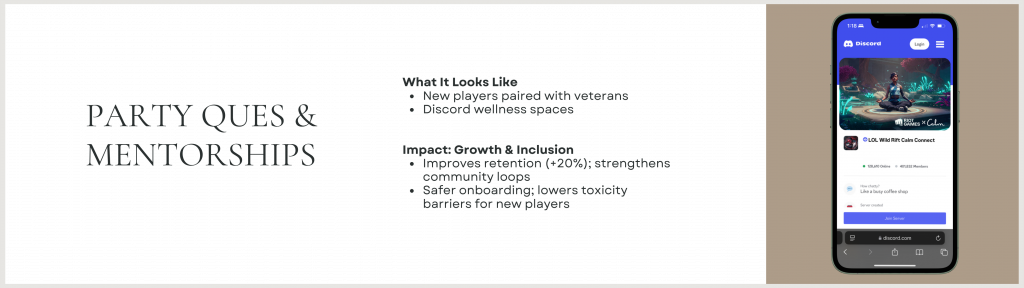
We embedded mental wellness directly into the player experience.
A Riot × Calm partnership built into how players play, recover, and progress, timed to the back-to-school transition, when stress peaks and wellness usage surges, but few gaming brands show up.
THE OUTCOME
Turning retention, behavior, and inclusion into a single system.
Mental wellness became a growth lever, not a brand message.
The system reduced churn, improved player behavior, and expanded the sense of welcome in the ecosystem, without softening Riot’s competitive edge.
It was recognized by Riot’s Global Brand Manager for aligning with the brand’s competitive DNA and bringing a systems-level approach to player experience.
My Role
I helped reframe the problem from toxic behavior to emotional friction under pressure, and translated that into a performance-based wellness system, connecting gameplay, community, and progression into a cohesive retention strategy.