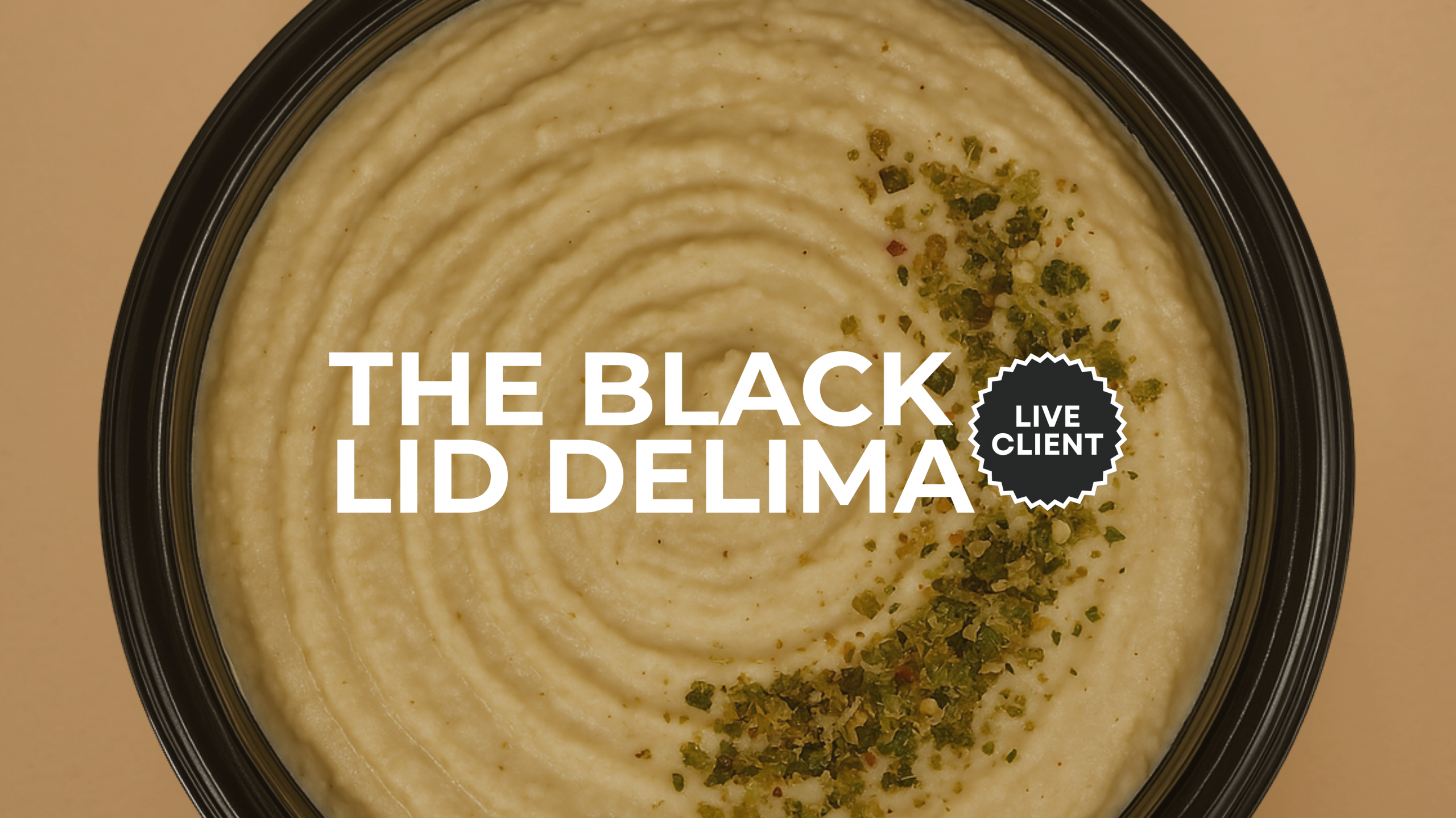
LIVE CLIENT | CPG
Consumer + Market Research, Brand Strategy, Decision Support, Creative Design
Reducing Retail Risk Through Shelf-Driven Packaging Strategy
THE SITUATION
A leading hummus brand was entering retail before knowing where it would live on shelf.
At the same time, packaging decisions needed to be made.
The question wasn’t just whether the packaging worked, but whether it would work in context.
THE TENSION
Packaging risked blending in, but redesigning without context was just as risky.
The brand’s black lid closely resembled private-label competitors, creating a risk of lost visibility and misidentification.
However, with shelf placement still unknown, any redesign risked solving for the wrong problem and driving unnecessary cost.
RESEARCH OBJECTIVE
Understand when, where, and if the packaging works.
Our team needed to determine whether the current packaging could capture attention and remain distinct from private label, and how that performance changed across shelf conditions.
Rather than validate in isolation, the goal was to understand how context shapes performance.
METHODOLOGY
Test performance in context, not in isolation.
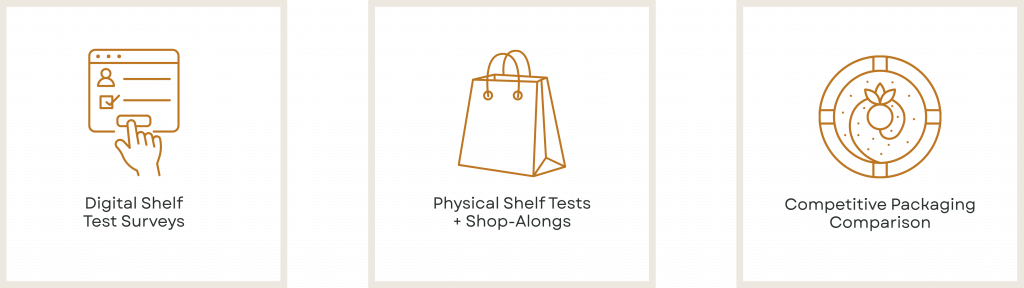
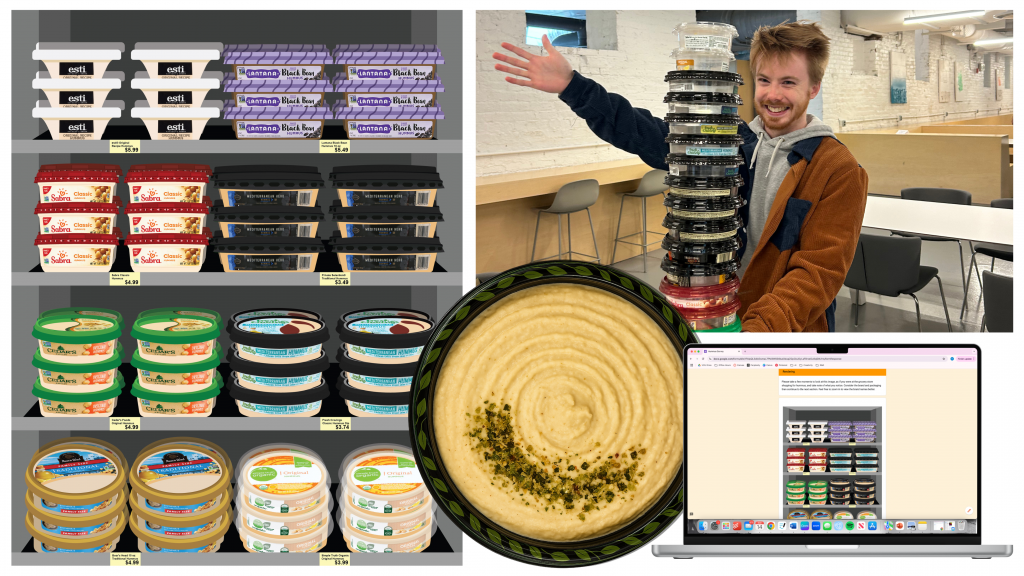
I helped shape a multi-method approach designed to reflect real shopper behavior.
INSIGHT #1

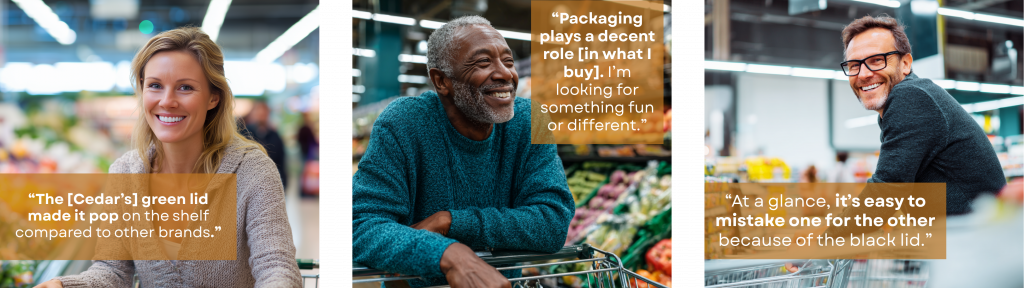
What felt distinctive in one environment became camouflage in another.
Shoppers consistently gravitated toward:
- brighter lids
- distinct shapes
- recognizable color systems
The black lid often missed the critical first glance.
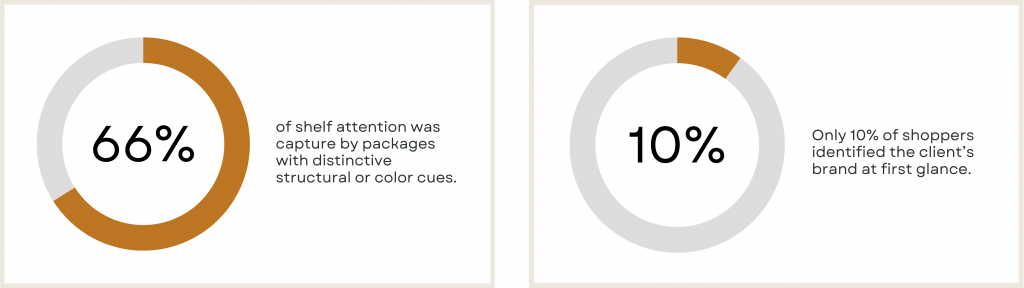
Shoppers also told us they look for something “fun or different” when browsing this category.
But the all-black lid doesn’t signal that at a glance, missing the critical first seconds of attention.
INSIGHT #2

Placement for the brand determined so much of what was happening at shelf.
At eye level or below, the packaging performed well—clearly signaling brand and product.
On higher shelves, it blended into the cooler, reducing recognition and increasing confusion with private label.
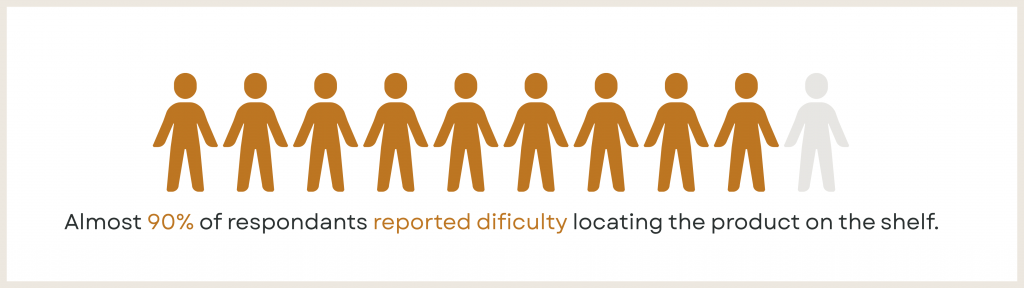
Because visibility shifted with where the product met the shopper’s eye, packaging performance couldn’t be evaluated in isolation; it was inseparable from placement.
Before making irreversible design decisions, we needed to understand how it performed in the real world, not just in theory.
STRATEGIC DECISION
When a key variable is unknown, speed becomes risk.
Our assessment was not to stop progress, but to pause the investment-heavy decision until shelf conditions became clear, because when a key variable remains unknown, the smartest move is informed patience.
Redesigning immediately risked:
- solving for the wrong condition
- investing in ineffective changes
- limiting future flexibility
RECOMMENDATION
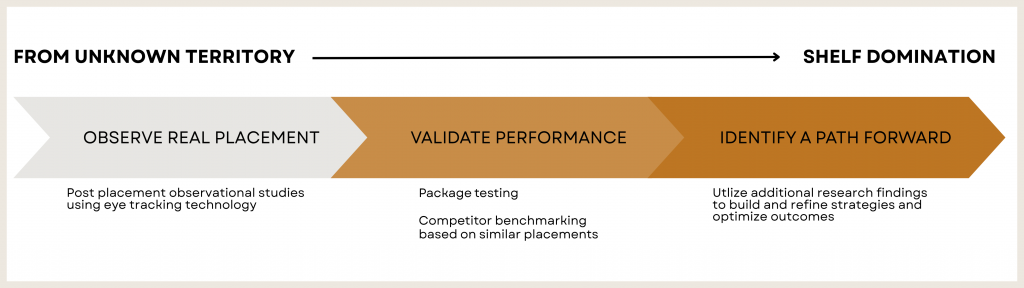
Sequence the decision instead of rushing it.
Instead, I guided the team to outline a more sequenced approach, allowing the brand to move forward while preserving flexibility:
CLIENT IMPACT
The brand adopted the sequenced approach, entering new retail with existing packaging.
The brand entered retail with its existing packaging—avoiding unnecessary redesign and disruption.
The sequenced approach preserved flexibility while enabling a more targeted path for future optimization.
The client praised the clarity and candor of the recommendation, and integrated the research and guidance into their internal insights library.
The Team: Jack Ziegler (CBM), Libby Browder (CBM)
My Role
I helped frame the business question, shape the multi-method research approach, and translate findings into clear, actionable guidance, balancing visibility, brand equity, and risk. I worked across functions to ensure the insights were not only understood but usable in real decision-making.